Time to read: 4 minutes.
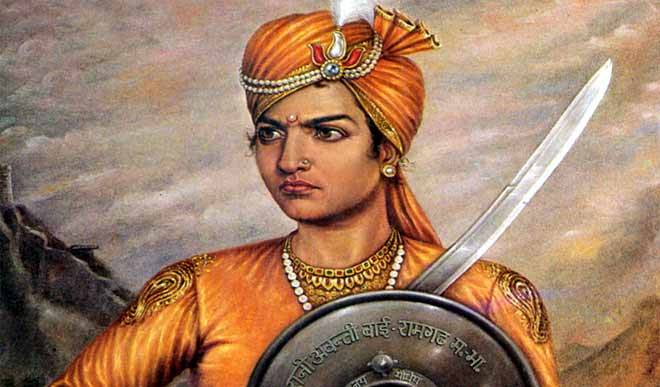
We bring you, yet another fascinating tale about an Indian queen who will captivate you with her attitude. Rani Avantibai Lodhi, an Indian Rajput queen-ruler and independence fighter She ruled as queen of Madhya Pradesh’s Ramgarh (modern-day Dindori). Information on this 1857 Indian Rebellion opponent of the British East India Company is scarce and primarily based on folklore. She belonged to the Lodhi Rajput community and has become a political symbol in the twenty-first century.
In the Lodhi Rajput family, Avantibai Lodhi was born on August 16, 1831, in Mankehadi, Seoni. Jujhar Singh was the name of her father. It is well known that she was quite independent and well-trained when she was a little child. She was an expert in both statesmanship and military strategy in addition to being a completely competent archer, rider, and swordswoman.
She was a strong candidate for a ruler because of her training in politics and combat. She was accepted as a suitable bride for the king’s son when word of her abilities and captivating personality went throughout the Narmada Valley. In her early years (around 1849), she married Ramgarh’s Vikramaditya Lodhi (which presently lies in Madhya Pradesh).Rajput Prince Vikramaditya Singh Lodhi, the son of Raja Laxaman Singh of Ramgarh, was her husband (present-day Dindori). Aman Singh and Sher Singh were her two kids. The Rani assumed control of the kingdom when the Raja became ill at the start of the 1850s since Aman Singh, the Raja’s son and successor, was still a minor.
The British refused to recognise Avantibai’s sons Aman Singh and Sher Singh as the rightful heirs to the throne since they were minors after the king became ill. They were able to appoint their own government to replace Lodhi rule since, in their opinion, there was no heir to the kingdom of Ramgarh.
This was because the British East India Company adopted a rather vague annexation policy (the Doctrine of Lapse, frequently linked with Lord Dalhousie) prior to 1858. It removed Indian kings’ authority to name successors by allowing the Company to impose administration in any princely state if the ruler was unable or passed away without a male heir.
Ramgarhh was declared the Court of Wards on September 13, 1851, and Sheikh Mohammad, a British-approved administrator, was put in charge. Rani Avantibai disagreed with this choice. She waited until she had the chance to respond after being deeply offended by the British East India Company’s action.
After the king’s death in 1857, she found the perfect opportunity to respond to the foreign insult. She had the administrator thrown out of the kingdom and declared war upon British rule.
The 1857 Rebellion
News of the events in Meerut and Delhi had reached every corner of the subcontinent by May 1857. After hearing that guns were being made using cow and pig fat, villagers had been preparing for an uprising for months. Rani Avantibai also made the decision to convey her own message.
A set of bangles and some handwritten messages were carried by diplomats who were despatched to neighbouring kingdoms to gain support for the fight against the British. The message was clear: either pick up guns and fight for their nation out of any sense of patriotism or honour, or stay at home and wear those bangles.
Avantibai made a pledge to battle the British in order to reclaim her crown and her territory.During the conflict of 1857, Avanti Bai Lodi Maharani, the widow of Raja Lakshman Singh of Ramgarh District, Mandla, assembled an army of 4000, declared war on the British, and fought valiantly. After dismissing the Courts of Wards officials chosen by the British, she took over control of Ramgarh state violently. There were a lot of British soldiers who died. Captain Washington’s hasty flight caused him to leave his infant son behind, but the Rani sent him through a special ambassador. She engaged in another courageous battle, but because her army was overpowered and she had little chance of winning or escaping, she killed herself,on March 20, 1858.She was not willing to surrender or ready to die in the hands of the invaders.
She was honoured with a section of the Bargi Dam project in Jabalpur that was given that name by the Narmada Valley Development Authority. In 1988 and 2001, India Post published two stamps in Avantibai’s honour.
We owe it to these brave souls to remember their experiences as individuals. Our daily existence, which is challenging but ultimately free, is made possible by these sacrifices.
