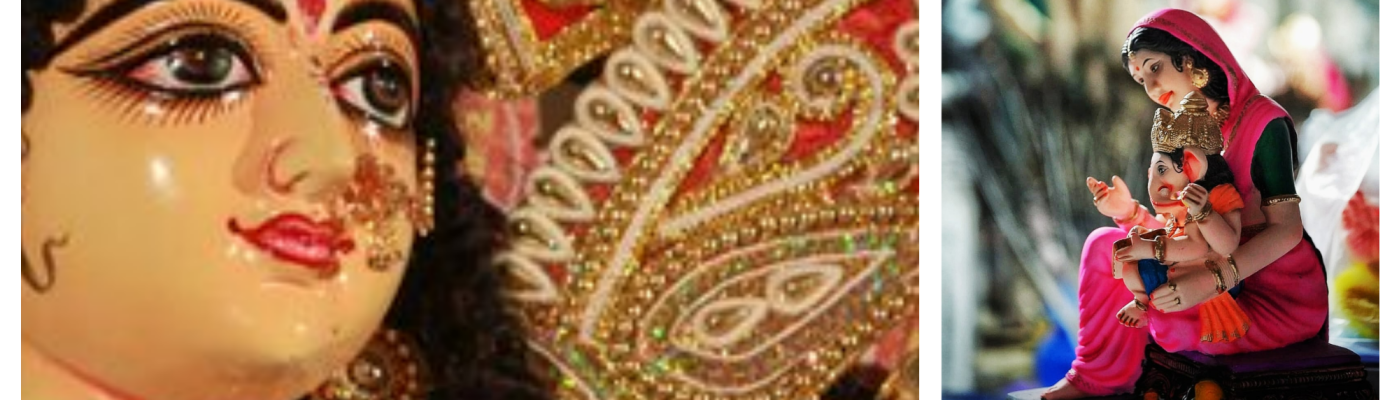
The birth of Krishna – Janmashtami
Krishna’s birth is commemorated by Hindus as Janmashtami, which is Sanskrit for “birth on the eighth day.” At midnight on the eighth day of the Indian month of Shravan, Krishna was born. Many followers celebrate birth at midnight after fasting all day. On this day, kids can act out Krishna stories and grownups can chant Krishna praises. The most well-known Hindu deity, Krishna, is worshipped on this day in the form of a child.
The birth of Rama – Ramanavami
On Ramanavami, people commemorate Rama’s birth. The occasion falls on the ninth day of the Chaitra month. Numerous devotees observe fasts over the eight days preceding the birth and spend this time listening to the epic Ramayana read aloud. The primary celebrations and worship are held in homes and temples at midday because Rama was born at that time. Children may act out scenes from the Ramayana during the celebrations, and devotees may recite and sing about Rama’s virtues.
Raksha Bandhan, or the “Bond of Protection,”
Raksha Bandhan is just one of many Hindu festivals that celebrate interpersonal bonds. Raksha Bandhan literally translates as “a thread for protection.” To emphasize the unique bond between a brother and a sister on this auspicious day, a sister ties a thread around her brother’s right wrist. The sister is then given a present by the brother. The thread represents “unique personal bonds,” but it also stands for “protection from adversities.” Any female can wrap this thread around any male’s wrist to raise their relationship to a platonic one.
Celebrates the bond between a teacher and students
Reverence for teachers – Guru Purnima
The relationship between a guru, the spiritual teacher, and the student, is considered to be very sacred. The guru is respected as the human intermediary between man and God. On this day. the student will visit and pay obeisance to his teacher, he may offer some gifts and ask for his blessings. Respecting the teacher may appear old-fashioned but is relevant in our times. It is an indirect way of paying tribute to the process of transmitting knowledge.
Bring colour to life – Holi
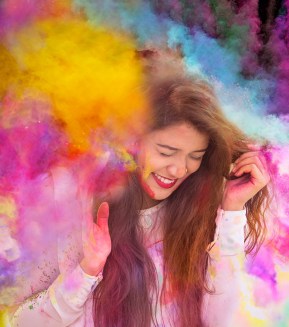
Holi is a Hindu celebration that commemorates the arrival of spring. This festival also celebrates a mythical episode involving Prahlad, a child Vishnu devotee. On this particular day. Vishnu rescued Prahlad from being burned alive by Holika, a demoness. Therefore, the festival is called Holi.
Traditionally, a bonfire is set and fed with things like grains, coconuts, and dates. The coconut may occasionally be toasted before being served as prasad, a holy food. To gain Vishnu’s blessings and protection and to witness the occasion, new-born babies are especially brought. People celebrate the coming of spring by splashing each other in coloured powder and water on the next day, known as Dhuleti. beginning of spring. The coming of spring heralds the arrival of colour to the landscape and is celebrated as a season of joy. Traditional ‘Holi’ made use of natural-colored powders having medicinal significance: the colors were traditionally made from natural plant-based materials like leaves, flowers, vegetables, and bark. For instance, rose petals for red, beet root for pink, turmeric for yellow, spinach for green, and Neem, Kumkum, Haldi, Bilva, etc. were used. As the spring-blossoming trees that once supplied the colors used to celebrate “Holi” have become rarer, many safety issues have been found with synthetic colors. “Holi” has become more of an environmental hazard nowadays. Due to the poisonous colours utilized during the celebrations, the “Holi” festival is posing an environmental risk. The unrestricted and unregulated use of such colours can have serious effects on human health and ecological balance. This is an attempt to raise public awareness of the health risks posed by toxic colours and going chemical-free will go a long way toward a safer and environment-conscious celebration of this vibrant festival.
The legend says that Lord Krishna used to play Holi with Palash flowers, scientifically called Butea Monosperma, and the flowers also have a lot of medicinal properties. Palash blooms during the month of March and is native to India.
A row of lights to welcome Rama – Diwali
Diwali, or the Festival of Lights, is the most well-known Hindu festival, taking place at the start of winter. It commemorates the night Rama returned home after fourteen years in exile. On this historic night, there was no moonlight, hence the citizens of his hometown Ayodhya, lit up the streets with many oil lamps or diyas to welcome Him home. The diya has become the emblem of the festival. The word Dipawali is the correct name for Diwali meaning ‘a row of lights’.
Hindus also observe Lakshmi Puja, the worship of the goddess of prosperity, during Diwali. Puja is carried out in the home with all the family members and may be led by a priest. This is accompanied by the exchange of gifts, new clothes, sweets, and money, and culminates in a lavish feast. Charitable activities are also performed on this auspicious day. Businessmen worship their books on this day as a way of showing respect to their trade in a ceremony called Chopra Pujan. There may be fireworks displays at night. The day after Diwali is the New Year for some Hindus; on this day resolutions are made and greetings exchanged.
Victory of good over evil – Navaratri and Durga puja
The word Navaratri means ‘nine nights’ and is the name of the festival that marks the advent of autumn. The event also marks the nine days Rama fought the demon Ravana with the blessings of the Mother Goddess Durga. Rama defeated the demon Ravana on the tenth day of Dusshera, sometimes called the ‘day of victory’ Vijaya Dashami.
According to another narrative, it is also the time when the Mother Goddess Durga fought a demon called Mahishasura for nine days. Symbolically the event celebrates the victory of good over evil by invoking strength, shakti.
Every night, for the nine nights of Navaratri, devotees gather together for folk dances called Garba which take place in a circle around the image of the Mother Goddess. Nearly all Hindus, young and old, male and female, participate in this annual event. Fruit and food are offered to the Mother Goddess and distributed to everybody at the end as Prasad. Since these are auspicious days in the Hindu calendar, it is traditional for many women to fast during this period Dusshera, the tenth day is the day when special worship of the Mother Goddess concludes, called Vijaya Dashami of the Durga Puja. To commemorate the victory of good over evil, an effigy of the demon Ravana is set alight.
Makar Sankranti
Makar Sankranti is a festival honouring the Sun God. Every ceremony performed during Makar Sankranti is an expression of gratitude to the natural resources that support life on Earth. The Sun God is praised for providing abundant harvests and nurturing livestock. Cattle, especially bulls and oxen, are revered because of their importance in traditional plowing fields. It is celebrated after the new crop is harvested. On this day, everyone worships the sun god and gives rice dal khichdi to charity. The khichdi is then prepared and consumed. During the Makar Sankranti festival, kites are flown.
Ugadi
The Hindu calendar’s New Year’s Day is Ugadi or Yugadi, also known as Samvatsardi. According to popular tradition, Lord Brahma created the universe on the same day as Ugadi. Lord Brahma then went on to create days, weeks, months, and years to keep track of time. As a result, it is thought that Ugadi represents the beginning or first day of the universe.
The day starts with traditional oil baths, which are followed by prayers. Many customs are related to the Ugadi celebration, one of which is the preparation of Ugadi Pachadi, a special prasad made with raw mango, flowers, salt, neem leaves, jaggery, and tamarind. The essence of life is said to be highlighted by Ugadi Pachadi.
