Sushrutha – first plastic surgery
Sushruta was an Indian physician who published one of the world’s first writings on medicine and surgery, earning him the titles “Father of Indian Medicine” and “Father of Plastic Surgery.”. The Sushruta Samhita (Sushruta’s Compendium), a famous treatise attributed to him, is regarded one of the world’s oldest texts on plastic surgery. Even in ancient times, plastic and dental surgery were practiced in India. The operation of nasal reconstruction or rhinoplasty (repairing the deformed nose with a flap of skin from the forehead) that Sushruta employed to reconstruct noses that had been mutilated as a punishment for crime was the highlight of Sushruta’s surgical splendors.
Aryabhata
Aryabhata is a well-known Indian mathematician, and one of the first. Born in 475 CE in Kusumapura, Pataliputra, during the administration of the Gupta Dynasty, he was noted for his remarkable knowledge in the science of astronomy. He has authored numerous treatises in both mathematics and astronomy. Indian Mathematical Literature was extensively mentioned in Aryabhatiya. The Vedic method of solving mathematical problems was explored, and unsurprisingly, it has lasted to the present day. Algebra, arithmetic, plane trigonometry, and spherical trigonometry were all covered in great detail. Aryabhata was awarded the title ‘Father of Algebra’ because of his remarkable comprehension and explanation of planetary systems using it. Aryabhata accurately determined the value of pi to two decimal places, 3.14. He also employed null coefficients and was well aware of the use of zero in such a place. Trigonometry was born from Aryabhata’s concepts of cosine, sine, inverse sine, and verse sine He was one of the first mathematicians to calculate sine and versine (1-cosx) tables from 0 to 90 degrees in the 3.75-degree range to four decimal places.
The modern names for the trigonometric functions sine and cosine come from his use of the Sanskrit terms ‘Jya’ and ‘Kojya.’ Other astronomers admired his astronomical mathematical abilities. They were frequently employed in the creation of Arabic astrological tables known as ‘zijes.’
In contrast to Aryabhatta, who correctly declared that the earth revolves on its axis around the sun every day, the movement of stars appeared to be caused by the relative motion caused by the earth’s rotation. This contradicted the generally believed belief at the time that the sky rotated. Through scientific investigations, Aryabhata demonstrated lunar and solar eclipses. He said that reflected sunlight produced the planets and Moonshine. He characterized eclipses as “shadows descending on the sun.”
Zero
Brahmagupta, an astronomer and mathematician, was the first to record zero as a number in its own right in 628 CE.
The concept of zero, or emptiness, existed before any South Asian hand wrote it down, but not in a usable form, so before delving into its origins, it’s critical to distinguish between a placeholder and a digit. The fundamental distinction between the two in mathematics is if there is proof that it was used in equations and thus is a repeatable phenomenon.
There have been placeholder zeros for thousands of years. According to Harvard math professor Robert Kaplan, the Sumerians utilized them for the first time in Mesopotamia 5,000 years Ago. In 628 CE, the astronomer and mathematician Brahmagupta was the first to document zero as a number in its own right. Before any South Asian handwritten it down, the concept of zero, or emptiness, did exist, but not in a useable form, thus before delving into its origins, it’s vital to distinguish between a placeholder and a digit. The fundamental distinction between the two in mathematics is if there is proof that it was employed in equations and so is a repeatable phenomena. For thousands of years, placeholder zeros have existed. According to Harvard math professor Robert Kaplan, the Sumerians used them for the first time 5,000 years ago in Mesopotamia. Both the Chinese and the Babylonians were aware of the concept of zero, but only as a placeholder concept, something that could not be replicated with the same outcome each time a given equation was applied. The concept spread from Mesopotamia through China, Babylon, and India, but it was only the latter that turned it into a reality. India was a perfect setting for the evolution of zero from a placeholder to a digit.
“Really, zero was used as an equation for the first time in India with the old Vedic mathematicians,” explains Peter Gobets, secretary and founding member of ZerOrigIndia, or Project Zero.
Yoga, Meditation and Ayurveda
Yoga, meditation, and Ayurveda are three invaluable contributions of India to the world. These are pearls of ancient wisdom that have been passed down from generation to generation for thousands of years and have now become an essential component of Indian culture and heritage. Recent studies and scientific studies have proven that incorporating the trio into one’s life has various benefits in terms of physical fitness and mental wellness. Yoga is a collection of physical, mental, and spiritual practices or disciplines that developed in ancient India with the goal of controlling and stilling the mind, identifying a detached witness-consciousness unfettered by the mind or mundane suffering. Meditation gives you peace of mind and control over your body. Ayurveda is a holistic medical system that addresses both preventative and curative aspects of health care.
Civilization is oldest
The Indus Valley Civilization, also known as the Harappan Civilization, was South Asia’s first urban civilization (modern-day Pakistan and northwest India). The Harappans constructed numerous expansive cities, remarkable for their urban design, water supply systems, intricate drainage systems, and high concentrations of non-residential buildings. The Indus Valley inhabitants also invented several technologies, including one of the world’s first systems of regular weights and measures. They also invented new metallurgical procedures and produced copper, bronze, lead, and tin. The Indus Valley Civilization embraced a variety of arts and crafts in addition to math and engineering. Various games and toys have also been discovered in the cities of the Indus Valley Civilization.
The majority of religions live peacefully
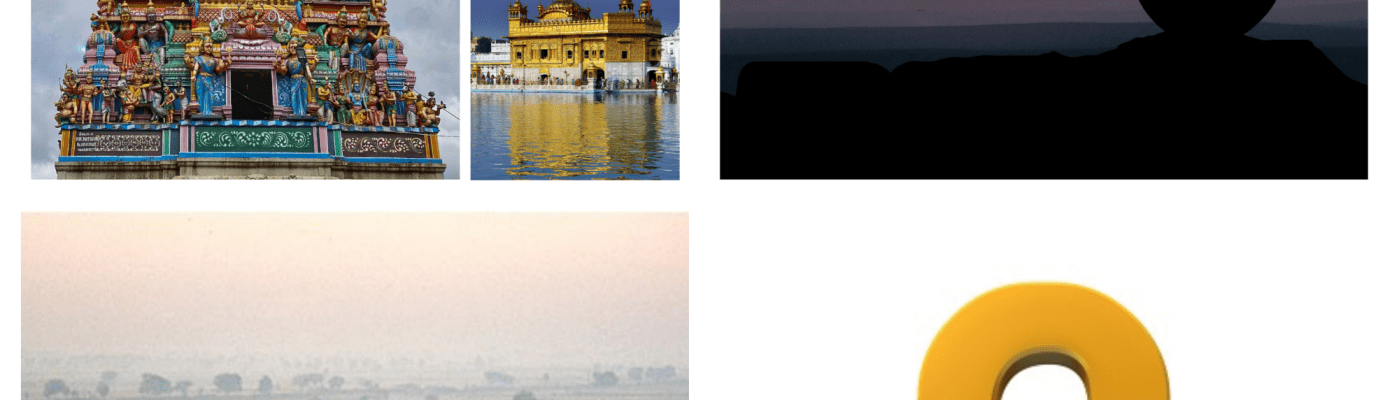
India is a tolerant society that welcomes people from all walks of life with varied beliefs, cultures, and customs. Hinduism, Islam, Christianity, Sikhism, Zoroastrianism, Buddhism, Jainism, Judaism, and Bahaism are among the many religions practiced in India. The Indian subcontinent is the birthplace of four main religions: Hinduism, Buddhism, Jainism, and Sikhism. Hinduism is practiced by around 80% of the population, with Islam being the second most popular religion. Religion, as is obvious, has always been a major component of Indian culture, and the country’s law and customs establish religious tolerance: religious freedom is a fundamental right, according to the Indian Constitution.
The World’s most active mosques
More than 300,000 mosques are active in India. This surpasses the number of every other nation, including those that are Muslim.
The largest postal network in the world
With more than 150,000 post offices, more than three times the number of China, India has the largest postal system in the entire globe. On Dal Lake in Sri Nagar, India, there is only floating post office in the world. All standard postal services are offered by the office.
World’s largest movie industry
In terms of output, Bollywood is the world’s biggest film market, followed by Nigeria’s Nollywood.
Greatest milk producer in the world
With 16 percent of the world’s milk output, India leads the way, followed by the United States of America, China, Pakistan, and Brazil.
The first university in the world
The world’s first university, Takshila, was founded in India approximately 700 BC.
The most people attend events in India
The largest of these was the “Kumbha Mela” in 2001, which drew 60 million visitors and was visible from space.
Indian Railway is the largest employer
Indian Railway is the largest employer in the world, with over a million employees.
The first granite temple
The first granite temple in the world is the Brihadeswara Temple, which is located in Tamil Nadu. It was constructed in the 11th century in about five years.
Earliest Diamond mining
India was the location of the earliest diamond mining. India has maintained its monopoly in the cutting and polishing of small diamonds for decades.
The largest arms importer in the world
Despite being the largest arms importer in the world, India has never invaded or attacked another nation.
The first to discover water on the Moon
The first country to discover water on the Moon was India. Chandrayaan-1, India’s first moon satellite, received the distinction.
Nuclear power
India intends to employ thorium because it is the “only country in the world with a detailed, funded, and approved government plan.” Since importing Uranium-233 has been limited by worldwide constraints imposed on certain countries, it is a nuclear fuel to generate electricity. Thorium, according to supporters, is critical to generating a new generation of cleaner, safer nuclear power. India possesses the world’s greatest thorium resources and is working hard to advance to the third stage of nuclear fuel consumption in order to become self-sufficient in nuclear fuel supply.
